
Tea Tasting Inspired by a Trip to Taiwan
Regular event: On selected days

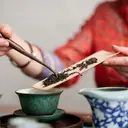
Illustration, not a photo from this event. Photo by Hailey Tong on Unsplash
Saturday, 14 November · 17:00
Alena Velichko Tea Studio, 7a–7 Gikalo St., white single-storey building, enter via the porch, where the “Flowers” shop is, then go down the corridor to the door with a sign.
50 Br
Opens Instagram with the message ready ·
Spotted a mistake? Tell us and we'll fix it
 Alena Velichko's Tea StudioTea & Cacao ceremony · Women's circle
You’ll try competition and non-competition teas from Taiwan: aged and fresh oolongs, red and white teas. The tea will also be brewed in a custom Taiwanese tea dripper being used at the studio for the first time.
What happens
- The host will share stories and flavors, talk about people, teas, tea competitions and the special features of Taiwan, and brew tea brought back from tea masters. Five teas will be selected for tasting from among the many varieties.
- One tea you may get to try, if it is selected for the tasting, is the red Honey Chin Shin Ganzai scented with Han Xiao flowers. Fresh flowers are mixed with tea leaves overnight so the leaves absorb their banana-and-tropical-fruit aroma; the flowers are then removed, or a few petals are left in. Han Xiao, also known as Michelia figo or the Banana Shrub, is a shrub in the magnolia family. Its small yellowish-white flowers smell of ripe banana, melon and tropical fruit, and are considered a legend of Taiwan.
- Honey Chin Shin Ganzai is a rare Taiwanese tea-bush variety used to make “honey” tea. Chin Shin means “Green Heart,” while Ganzai means “little mandarin” or “citrus”: the leaves, with serrated edges and slightly curled-up tips, resemble mandarin leaves. The variety grows almost exclusively in Sanxia District in northern Taiwan. The name Honey, or Mi Xiang, refers to the tea-making process and the tea’s dessert-like profile. Ganzai is usually used to make Bilochun, a Taiwanese green tea with the aroma of fresh cucumber and herbs. In summer, Jacobiasca formosana cicadas bite the leaves on the plantation; the leaves’ chemical composition changes and they release enzymes. These leaves are used to make heavily fermented oolong or red tea with aromas of nutmeg honey, tropical fruit and berry jam.
Who leads it
The tasting is led by the author of the publication, who will share stories and brew tea brought back from tea masters.
Good to know
Each gathering has no more than eight places.
How to sign up
Advance booking is required through the organizer.
Similar events
 Today
 Tomorrow


What else is on in the city
 Today
 Today
 Today
 Today